
HARVEST REPORT – 2026
Prepared by Dr. Laura Catena, Chief Winemaker Alejandro Vigil and Viticulturist Luis Reginato
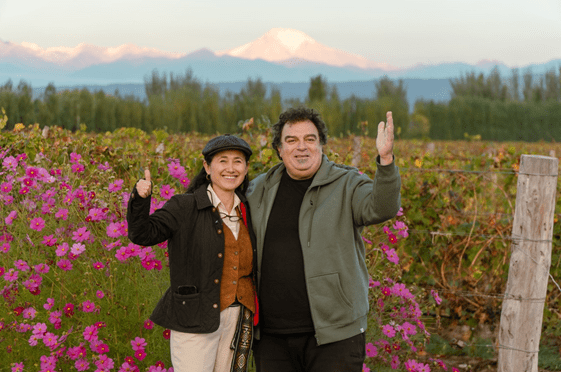
A cool, wetter-than-usual growing season produced wines of exceptional quality, marked by a strong sense of place. From a winemaking perspective, early evaluations show wines with a more austere and vertical profile, featuring defined structures, good tension, and a more restrained yet precise aromatic expression. The combination of natural acidity, phenolic maturity achieved under cool conditions, and excellent fruit health suggests a vintage with very high qualitative potential. 2026 is shaping up to be a vintage with a strong sense of place, and heightened differences between regions.
Cooler-Than-Normal Temperatures
The 2026 season closely resembled the 2019 vintage, with average temperatures well below historical norms. Slower ripening led to better alignment between sugar and phenolic maturity while preserving high natural acidity.
Above-Average Rainfall
Rainfall was significantly higher than normal across all regions, with Uco Valley vineyards receiving 30–110% more than average. Concentrated, fast-draining rain events minimized disease pressure and reduced or eliminated the need for irrigation.
Pronounced Regional Variation
Climatic heterogeneity between regions far exceeded previous vintages, creating distinct differences in ripening timelines and wine styles that are structurally embedded in the character of each wine.
Complex Harvest Logistics
The breakdown of typical harvest timing between regions and varieties required simultaneous picking of Chardonnay, Malbec, and Cabernet Sauvignon from different parts of Mendoza, demanding exceptional operational precision.
Spring Frost and Snowstorm
resulted in dramatic yield reductions in the highest altitude areas of Gualtallary.
Exceptional Quality Potential
Early evaluations reveal wines with defined structure, good tension, and precise aromatic expression. The combination of natural acidity, healthy fruit, and cool-climate phenolic maturity points to a historically significant vintage.
REGIONAL OBSERVATIONS
First Zone – Luján and Maipú
Angélica Vineyard (Lunlunta). Cooler than the last four years, with 24% more precipitation than average. After several years of good average yields, this year our 102-
year-old Malbec vines took a rest, yielding 22% less than last year — but as always, with outstanding fruit quality.
La Pirámide Vineyard (Agrelo). Similar to Lunlunta — the coolest harvest of the last four years. With 30% more rainfall than normal, yields were 2% higher than last year.
Uco Valley — Tupungato
Adrianna Vineyard in Gualtallary. We had an extremely cold winter, followed in spring by a frost that caused no damage thanks to the high humidity that night. Spring was
warmer than normal, which advanced shoot and flower growth. Summer was cooler than average and the coldest of the last four years, with fewer days above 33°C. Rainfall was
39% above a normal year, minimizing the need for drip irrigation. Autumn brought very pleasant temperatures and sunny days that ripened the grapes by the normal harvest dates. At the higher-elevation GY Alto block, a snowfall on October 28 reduced yields by 80%. We harvested only 15–20% of our normal yield. Rainfall this season was 36% above
average.
Domingo Vineyard in Villa Bastías. We had a very cold winter here, followed by a warm spring and a cool summer. Rainfall was 14.5% above normal, and production was 15%
lower than last year.
Uco Valley — San Carlos
Nicasia Vineyard in Paraje Altamira. It was a relatively warm year for this vineyard, with more than usual cloudy days and 90% more rainfall than average. In some parcels, no irrigation was necessary at all after the soil profile was recharged during winter. Total rainfall this year was 526 mm. Production was 33% lower than last year. The wines show very good concentration, elegance, and the characteristic spice typical of Altamira. Dry (rainwater) farmed after winter glacier water fill.
Angélica Sur in IG Pampa El Cepillo. This was an atypical year for this vineyard. We began with a very cold winter with very low minimum temperatures and many more days below zero than usual. From spring through autumn, temperatures were below average — the coldest year for this vineyard since 2019. While we had good humidity levels throughout the season, with 31% more rainfall than normal, we experienced four mild frost events in spring, during which we were able to confirm the effectiveness of the wind towers installed last year. Most surprisingly, yields were 40% higher than last year, which pushed the harvest back two weeks as the vines had more fruit to ripen under cool temperatures. We finished harvesting the Malbec on April 8th.
El Cepillo in IG Cordón El Cepillo. Temperatures were similar to average, with 110% more precipitation than normal (798 mm). This was another vineyard where no irrigation was necessary at any point during the season. Yields were 23% above average, and the harvest was delayed by one week.